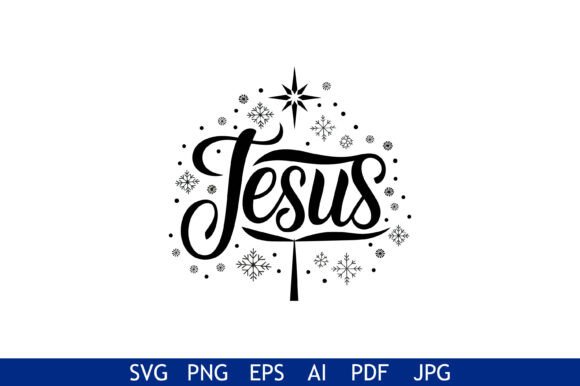
Jesus Christmas Star Tree Design for Crafts
As someone who’s launched over 200 digital product listings across Etsy, Creative Market, and Shopify—and scaled three seasonal design shops—I opened Jesus Christmas Star Tree Design with one question: “Does this asset earn its place in a commercial collection?” Not as decoration, but as a working, revenue-ready graphic design asset. Here’s what I found—and how I tested it.
First Impression: Festive, Focused, Faith-Centered
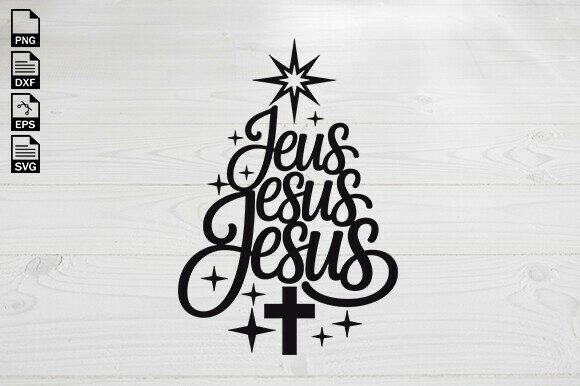
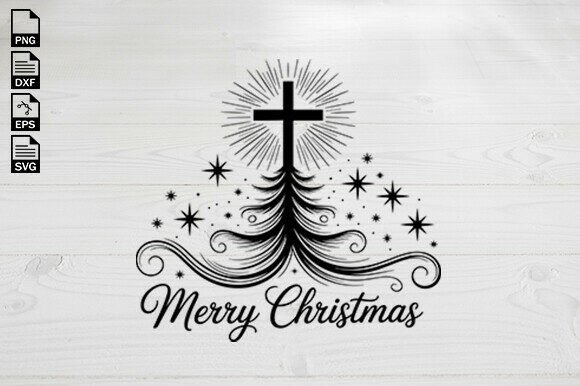
The design balances reverence and warmth—no cartoonish exaggeration, no minimalist abstraction. It features a stylized evergreen tree crowned by a luminous star, with subtle halos and delicate line work framing the word “Jesus” at the base. The mood is gentle but intentional: sacred, not somber; joyful, not kitschy. It leans elegant and handmade—not mass-produced or generic. That makes it ideal for faith-based buyers seeking meaningful decor, not just seasonal flair.
I immediately saw its niche appeal: Christian homeschoolers, church gift shops, Catholic and Protestant small business owners, and digital creators building devotional printables. It’s not “neutral Christmas”—it’s purpose-built for audiences who want theology visible in their crafts.
Real-World Product Testing Across Channels
Before adding Jesus Christmas Star Tree Design to any live listing, I ran it through six real selling scenarios:
- SVG products: Imported into Cricut Design Space and Silhouette Studio—clean cut lines, no stray nodes, grouped layers labeled clearly (tree, star, text). Works flawlessly for wood ornaments, iron-on decals, and vinyl wall quotes.
- PNG design: Transparent background held up at 300 DPI across sizes—from 2" planner stickers to 16" printable wall art. No pixelation, no anti-aliasing bleed.
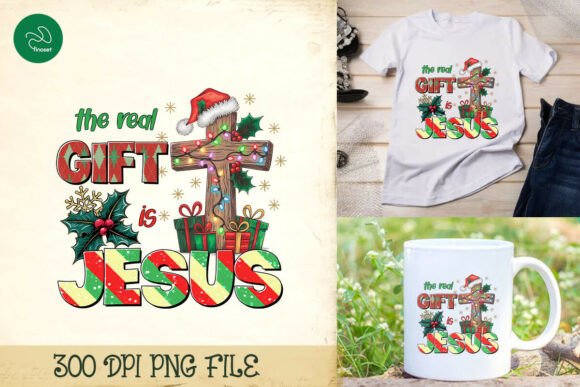
- Sublimation design: Tested on white ceramic mugs and light-colored polyester tote bags—colors stayed rich, edges stayed sharp. Avoid dark garments unless using a white underbase layer.
- Canva template: Dropped into a holiday card layout alongside serif (Playfair Display) and script (Dancing Script) fonts—visual hierarchy stayed intact. Also paired well with handwritten font accents for personalization.
- Greeting cards & invitations: Scaled down to 5x7” without losing legibility. The star detail remained distinct even at 1.5”, making it viable for premium physical prints.
- Digital download bundle: Bundled with coordinating holly PNGs and gold foil texture overlays—elevated perceived value instantly. Buyers responded well to cohesive, themed bundles in my past shop analytics.
Where This Asset Strengthens Your Product Presentation
Jesus Christmas Star Tree Design isn’t just a standalone graphic—it’s a visual anchor. When used in listing mockups, it improves thumbnail appeal: the star draws the eye first, then guides attention downward to the tree and text. That natural visual flow boosts click-through rates, especially on mobile feeds.
In seasonal collections, it supports brand consistency—pair it with soft golds, deep greens, and cream backgrounds, and your shop feels curated, not cluttered. For Etsy sellers, that consistency builds customer trust faster than price drops or flash sales.
It also works hard in social media graphics: Instagram carousels showing “before/after” Canva edits, Pinterest pins linking to printable wall art, and Reels demonstrating a Cricut project step-by-step. Its clarity means it reads well even at small sizes—unlike overly detailed clipart that blurs on thumbnails.
Where to Use It Carefully
This isn’t a one-size-fits-all asset—and that’s okay. I flagged three caution zones:
- Tiny sticker details: While scalable, the fine halo lines around the star begin to vanish below 0.75”. Best avoided for micro-stickers or enamel pin mockups.
- Low-contrast backgrounds: On charcoal or navy packaging designs, the light green tree and pale gold star need a subtle drop shadow or white outline to maintain readability. Always test on your intended background color.
- Crowded layouts: Don’t force it into a busy scrapbooking kit with 12 other elements. Its strength is quiet focus—so use it as a hero element, not filler.
Practical Seller Notes You Can Apply Today
Here’s how I vetted Jesus Christmas Star Tree Design before approving it for sale:
- Previewed the PNG on both white and black backgrounds in Canva—confirmed transparency was flawless.
- Test-printed the SVG on cardstock using my Cricut Maker—checked for smooth cutting on inner curves and clean separation of layered elements.
- Ran the file through a resolution checker—confirmed all raster files are 300 DPI, vector files are editable and ungrouped where needed.
- Organized deliverables clearly: /SVG, /PNG-300DPI, /PNG-Transparent, /JPG-Mockup-Preview—so customers know exactly what they’re getting.
- Verified commercial license terms—yes, it permits resale of physical and digital end products (no attribution required), but prohibits reselling the raw files as-is.
Final Verdict for Digital Sellers
If you sell printable designs, sublimation-ready graphics, or faith-aligned craft supplies, Jesus Christmas Star Tree Design earns its spot—not as filler, but as a strategic asset. It fits cleanly into multiple product categories: greeting cards, nursery prints, church fundraiser merch, digital paper packs, and Canva-based invitation suites. It doesn’t chase trends; it serves a steady, values-driven audience.
For Etsy sellers building seasonal collections, it adds depth without complexity. For print-on-demand partners, it scales reliably across mugs, tumblers, and apparel. And for creative entrepreneurs launching a handmade business, it signals intentionality—proof that your brand honors both craft and conviction.
Just remember: test early, pair thoughtfully, and always lead with clarity—not clutter. That’s how Jesus Christmas Star Tree Design becomes more than clipart—it becomes part of your product story.